
Women's History Month feature: The women honored on LIHI’s buildings
We at LIHI are celebrating Women's History Month by sharing the stories of the many women from many cultures and backgrounds whose names grace LIHI's buildings. In 2025 we were able to celebrate two women, Melinda Nichols and Patsy Surh, by naming two of our newest buildings after them. Nichols Court in Seattle celebrates Melinda and her husband Clifford for their long term dedication and support to LIHI for over 20 years. Patsy Surh Place in Tacoma recognizes celebrated artist Patsy Surh who is a founder of Asia Pacific Cultural Center.
Happy Women's History Month!
LIHI Properties named for Heroic Women
Nichols Court

Nichols Court, LIHI's latest property honoring an important woman, celebrated its grand opening in September of 2025. Just last month all 148 apartments were leased up!
Nichols Court is named for longtime LIHI Board President Melinda Nichols and her husband, artist Clifford Nichols. Melinda was the first female apprentice carpenter in Washington state. She has a long career in public service including serving as Director of ANEW and Director of Facilities for Seattle Parks and Recreation Department. As a board member, Melinda co-founded LIHI's Tiny House Program and has been instrumental in developing LIHI's partnerships with carpentry and construction apprenticeship programs to provide hands-on educational opportunities for students building tiny houses. LIHI has over 700 tiny houses providing shelter to homeless families and individuals. Clifford Nichols is a Native American artist and long time supporter who donates his work to LIHI's annual auction. He is a member of the Eastern Shawnee Tribe of Oklahoma and his work In wood and fabric have been shown in museums and galleries in the Northwest and Southwest.

Patsy Surh Place

Patsy Surh Place, which opened in May of 2025, is named after Patsy Surh O'Connell. Patsy is an exceptional community leader with an unwavering commitment in promoting Asian and Pacific Islander heritage, culture, and arts throughout the region. Patsy’s passion stems from a unique desire to honor her Korean heritage and to honor her parents’ legacy. She was born in Shanghai, China to Korean parents, and lived her early life in Korea before immigrating to America as a student in 1963. She founded the Asia Pacific Cultural Center in 1996 with a dream to create a central gathering place for people to connect through Asian Pacific art and culture. Patsy serves as APCC’s President and under her strong leadership the organization has grown and expanded to serve hundreds of thousands of people each year throughout the State of Washington.
In addition to her work with APCC, Patsy was instrumental in forming the Washington Korean Artists Association. In 2018, she was awarded the Governor's Heritage Award for her decades of work and dedication. She served on the Washington State Arts Commission and on the Board of the Western States Arts Federation. Patsy has a heart of gold. Her sincerity and kindness shines through in all the work that she has done for the community.
At the building's open Patsy said, "All of you are here to celebrate low-income housing, not me. It just has my name on it. It is indeed an immense honor to have my name associated with such a beautiful community housing project. I would like to express my gratitude to Sharon and LIHI: their relentless effort to serve seniors, homeless, and veterans. Our APCC executive director Lua has shown remarkable dedication and energy in being a partner in this project. I cannot stress enough how grateful I am for her unwavering commitment. I am confident that this much needed housing initiative will provide countless opportunities for those who are in desperate need of a safe, comfortable, and secure place to call home."

Maureen Howard Place

Maureen Howard was a fearless champion for the rights of homeless people. A near lifelong resident of Washington, Howard served as an advocate for affordable housing for nearly 40 years until her passing in early 2023.
She began her career in advocacy as Director of the Martin Luther King Ecumenical Center in Tacoma, was a founding member of the Washington State Coalition for the Homeless, served as Executive Director of Habitat for Humanity of Washington State, and a very active member of Tacoma-Pierce County Coalition to End Homelessness.
Howard was an essential figure in Pierce County’s fight to get people off the streets and into affordable housing. “It would be very strange to undertake any notable advocacy on behalf of homeless persons without consulting Maureen,” said Michael Mirra, former executive director of the Tacoma Housing Authority, in a Tacoma News Tribune retrospective on Howard’s life and work.
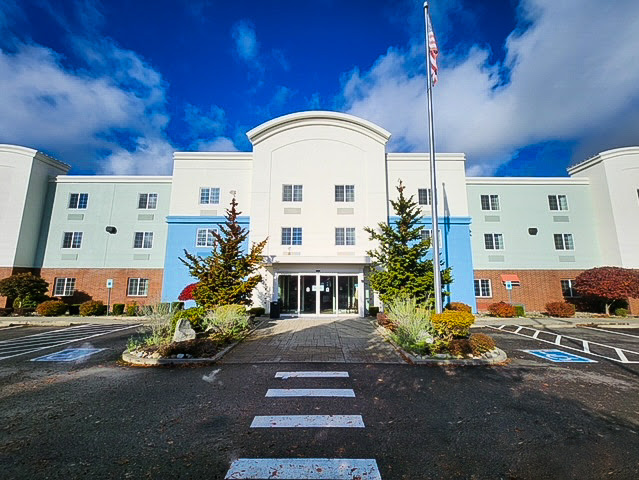
It is with this in mind that LIHI named this enhanced shelter in Lakewood in Pierce County after Howard. Maureen Howard Place will serve as a testament to her life’s work and her dedication to her community.
Aki Kurose Village

Seattle teacher and tireless peace and social justice activist, Aki Kurose (1925–1998) spent her life advocating on behalf of the neglected, the disadvantaged, and children. She helped establish Seattle's Head Start program, crusaded for non-discriminatory affordable housing, and won numerous awards for her innovative work as an elementary school teacher. A Nisei, Kurose's life's course was altered when she, along with her parents and three siblings, was imprisoned in a World War II U.S. government prison camp. During and after the war, at a Quaker university in Kansas, she adopted a lifelong belief in the Quaker values of peace and nonviolent conflict resolution, which became the foundation for the rest of her life's varied work.

Cheryl Chow Court

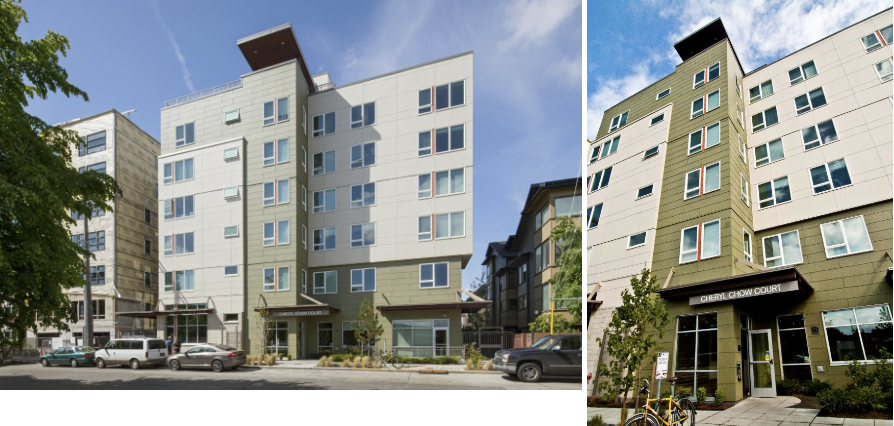
Cheryl Chow (1946-2013) spent her entire life dedicated to the children and families of Seattle. A proud graduate of Franklin High School and WWU, she became a well-known educator and administrator in many Seattle Public Schools. Cheryl sat on the board of various non-profits, volunteered for 30 years as a girls' basketball coach and spent over 40 years as director of the Seattle Chinese Community Girls Drill team. In 1990 She was elected to the Seattle City Council and served two terms. She was also elected to the Seattle School Board where she served one term.
Cheryl was a visionary in getting the Seattle City Council to approve the development of housing for homeless families, youth and singles at the former Sand Point Naval Station at Magnuson Park. Cheryl worked diligently with housing advocates to ensure that homeless people have a place to call home.
After retiring, Cheryl spent a decade working for the Girl Scouts of Western Washington. Cheryl Chow was instrumental in the creation LIHI'S Urban Rest Stop in downtown when she was chair of the City Council’s Housing and Human Services Committee, secured funding for LIHI to purchase the Julie Apartments and locating the Urban Rest Stop on the first floor. She stood up to NIMBY opposition from a faction of the downtown business community.
Denice Hunt Townhomes

Born in Kingston, Jamaica to a mother of Chinese descent and a father of African descent, Denice Johnson Hunt (1948-1997), was an architect, urban planner, historic preservationist, and served as Deputy Chief of Staff to Seattle Mayor Norm Rice, in which role she was instrumental in the development of the Seattle waterfront, the downtown plan, Benaroya Hall, and the Northwest African American Museum. She later on the King County Historic Landmarks Board.
Denice became the first woman of African American heritage in the US to serve in the highest elected office of a local component of The American Institute of Architects (AIA), following her election as President of AIA Seattle 1995-96. As a founding member of the AIA Seattle Diversity Roundtable, she helped establish diversity programs in practice and education.

June Leonard Place

June Leonard (1943-1994) represented Washington’s 11th Legislative District from 1985-1994. A long-time activist in community organizations, June led a life of public service, including serving as Executive Director of Renton Area Youth Services and President of the Renton School Board. A mother with nine children, she was famous for saying, “Hungry kids can’t learn.”

Jean Darsie Place

Jean Darsie was a prominent advocate for the environment and homeless people in Seattle. One of the founders of the Ballard Community Taskforce on Homelessness and Hunger (BCTHH), Darsie also campaigned for economic justice, racial justice, and women's rights.
With the BCTHH, Darsie was a notable supporter of the Ballard Urban Rest Stop, Cheryl Chow Court, and a number of tiny house villages. In 2015, LIHI awarded her a Housing Hero award for her efforts. She was also a member of LIHI's Whittier Heights Tiny House Village Community Advisory Council.
After her passing in 2022, Sally Kinney of BCTHH said, "Jean's list of accomplishments and areas of advocacy is long. Suffice it to say that she loved Ballard, the City of Seattle, the State of Washington, our country, and the whole universe of humans, animals, and plants, and did everything in her considerable power to make life better for everyone and everything in that universe. She is a huge loss."

Ernestine Anderson Place

Ernestine Anderson Place is named in honor of legendary jazz singer Ernestine Anderson, an international star from Seattle’s Central Area and graduate of Garfield High. In a career spanning more than five decades, she recorded over 30 albums. She was been nominated four times for a Grammy Award. She sang at Carnegie Hall, the Kennedy Center, the Monterey Jazz Festival, as well as at jazz festivals all over the world.

The Marion West

The Marion West is named for racial justice champion Marion West, who along with her husband Ray, who was Black, faced discrimination and helped break the color barrier in the U-District by housing African Americans and students of color in the 1950s.

Abbey Lincoln Court

Located next to Ernestine Anderson Place, this building honors Abbey Lincoln (1930-2010), American jazz vocalist, songwriter, actress, and civil rights activist. A dramatic performer whose interpretations were full of truth and insight, Lincoln notably worked with Benny Carter and Max Roach (who she married). In 1960, she recorded Roach's civil rights jazz masterpiece, “We Insist! Freedom Now Suite.” She appeared on a number of TV shows, including Mission: Impossible and All in the Family, and in several films, including For Love of Ivy with Sidney Poitier and Beau Bridges, and Spike Lee’s Mo’ Better Blues.


